

When can i stop worrying about food getting stuck in wisdom teeth holes—this is a common question after wisdom teeth extraction, a frequent dental procedure that leaves open sockets (often called “holes”). These sockets are the empty spaces where the teeth once sat, and when can i stop worrying about food getting stuck in wisdom teeth holes becomes a top concern as food gets trapped easily in the early days. As healing progresses, they naturally shrink and close over time.
Food getting trapped is very common in the early stages because the sites are raw, open, and shaped like small craters. The good news? This risk steadily decreases as healing advances.
Let’s look into the detail how healing works, realistic timelines, food-trapping risks, prevention, safe cleaning methods, diet, and warning signs. While the information is based on dental knowledge and common clinical guidance, it’s not a replacement for personalized advice. Always follow your dentist or oral surgeon’s instructions for your specific case, especially when navigating when can i stop worrying about food getting stuck in wisdom teeth holes.
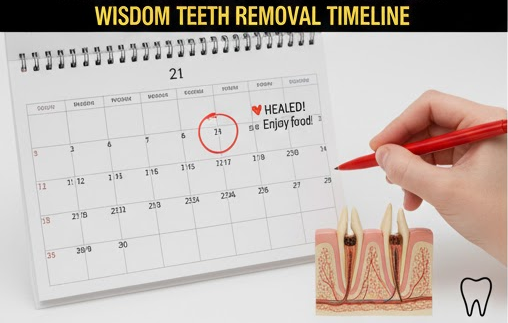
You can usually stop worrying about food getting stuck in wisdom teeth holes after 7–14 days. During this period, gum tissue begins closing the socket, making it harder for food to lodge deeply. Most people feel largely worry-free by 4–6 weeks, and full gum closure typically occurs by 6–8 weeks, depending on healing speed, socket size, and extraction complexity.
Wisdom Teeth Healing Timeline Overview
Healing after wisdom teeth removal is a multi-stage biological process involving blood clotting, tissue regeneration, and bone remodeling. It starts immediately after extraction and can take 6-8 weeks for full closure, but the socket’s vulnerability to food trapping peaks early and fades quickly. The following table provides a concise overview of key stages, events, socket changes, and associated risks—use it to track your progress and know what to expect day by day.
| Stage | Timeline | Key Biological Events | Socket Size Change | Food Trapping Risk Level |
| Immediate | 0-24 hours | Blood clot formation | Wide open (full depth) | Extremely High |
| Stabilization | Days 2-3 | Inflammation peaks; clot integrates | Still open | Very High |
| Foundation | Days 4-7 | Granulation tissue edges form | Slightly smaller | High |
| Growth | Weeks 2-3 | Tissue in-growth; shrinkage | 50% smaller | Moderate |
| Organization | Weeks 4-6 | Full tissue fill; bone starts | Mostly closed | Low |
| Closure | Weeks 7-8 | Epithelialization complete | Fully closed | Negligible |
When Can You Stop Worrying About Food Getting Stuck In Wisdom Teeth Holes?
You can generally stop actively worrying after 1-2 weeks, as the sockets have shrunk enough that food particles are less likely to lodge deeply, and the risk of complications drops significantly. By this point, gums have partially closed over the clots, and natural absorption handles minor debris. However, full “worry-free” status comes at 4-6 weeks, when the hole is nearly closed and bone is remodeling. For complete peace of mind (no visible hole), wait 6-8 weeks.

Factors like socket size (larger lower wisdom teeth holes trap more) influence this—upper sockets heal faster due to gravity aiding drainage. If you’re a slow healer (e.g., smoker), extend vigilance to 3 weeks.
What Happens If Food Gets Stuck In Wisdom Teeth Holes? The Biological Consequences
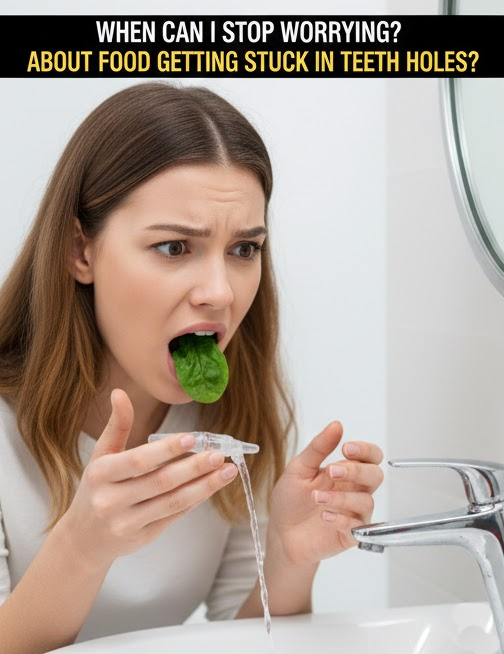
Food particles (e.g., seeds, fibers, grains) can fall into the socket and ferment due to bacteria, leading to:
Possible Effects of Trapped Food
Delayed Healing: The body diverts energy to break down debris via enzymes and white blood cells, slowing tissue growth by days to weeks.
Inflammation and Discomfort: Localized swelling, tenderness, or throbbing pain may occur.
Bad Breath and Taste: Bacterial breakdown can cause halitosis or a foul, metallic taste.
Infection Risk (Pericoronitis): Bacterial overgrowth may lead to pus, fever, or abscess if untreated.
No Direct Dry Socket Link: Food doesn’t cause dry socket, but aggressive poking may increase risk.
The body gradually breaks down small food remnants during normal healing, which can temporarily tax the immune response.
Prevention: Every Tip to Minimize Food Trapping
Prevention is 90% of the battle. Focus on diet and hygiene:
1. Diet Choices
Avoid sticky (caramel, gum), crunchy (nuts, chips, popcorn), chewy (steak, bagels), seeded (strawberries, sesame), or fibrous (celery, lettuce) foods for 2–4 weeks. Skip carbonated drinks.
2. Eating Habits
Chew on the opposite side. Cut food small. Eat upright to let gravity help.
3. Hygiene Routine
Start saltwater rinses 24 hours post-op (1 tsp salt in 8 oz warm water). Swish gently 4–6 times daily. Use a soft toothbrush angled away from sockets.
4. Lifestyle Tips
No smoking or vaping. Avoid straws. Stay hydrated.
Pro Tip: If provided, use a curved-tip irrigator from day 3 onward.
Safe Removal Methods: Step-by-Step Techniques
If food gets stuck (visible as white/yellow specks), act gently—never poke with toothpicks or fingers (risks infection/clot loss). Wait 24 hours before any cleaning.
Saltwater Rinse (Days 1–7+)
Mix ½ tsp salt in 8 oz warm water. Tilt head, let solution pool over socket, gently swish (no force) for 30 seconds. Spit softly. Repeat after every meal/snack.
Why it works: Osmosis draws out debris; antimicrobial properties kill bacteria.
Syringe Irrigation (Week 1+)
Use a dentist-provided plastic syringe filled with warm saltwater. Aim tip at socket edge (not directly in), apply gentle pressure to flush. Do 2-3x/day.
Minute Tip: Sterilize syringe with boiling water; start with low pressure to avoid spraying.
Water Flosser (Week 2+)
On lowest setting, direct stream at a 45° angle to the site. Caution: Too much pressure can irritate new tissue.
Q-Tip or Soft Brush (Surface Debris Only)
Dampen a sterile cotton swab with saltwater; lightly dab visible particles. Or brush with a baby toothbrush. Avoid deep probing.
Professional Help
If stuck >48 hours or painful, see your dentist—they use air-water syringes or curettes safely.
Rinses after 7-10 days often dislodge 90% of particles naturally as sockets shrink.
Signs of Complications: Red Flags to Watch For
Most food issues resolve harmlessly, but monitor for:
Dry Socket (Alveolar Osteitis)
Severe radiating pain (ear/jaw) 2-4 days post-op
Empty-looking socket (no clot)
Bad breath
Risk: 2-5% of extractions; higher in smokers/bottom teeth.
- Treatment: Dentist packs medicated dressing.
Infection Due To Bacterial Overgrowth From Debris
Worsen swelling after day 3
Pus(yellow/white discharge), fever, foul taste
fever >101°F
- foul taste/odor
Other Warning Signs
Bleeding beyond 24 hours
Numbness longer than a week
Difficulty swallowing
Dry socket pain feels like “exposed nerve fire”—peaks at night. Infection pus may taste metallic.
Complication Overview Table
| Complication | Onset | Key Symptoms | Risk Factors |
| Dry Socket | Days 2-5 | Throbbing pain to ear/temple; visible bone | Smoking, trauma, poor hygiene |
| Infection | Days 3-7 | Swelling, pus, fever, bad taste | Trapped food, diabetes, weak immunity |
| Delayed Healing | Weeks 1-4 | Prolonged tenderness; slow closure | Poor diet, non-compliance |
Factors Affecting Healing Speed and Food Risk
- Individual Biology: Age (younger = faster), health (diabetes slows by 20-30%), genetics.
- Extraction Type: Impacted/traumatic = larger sockets, 1-2 week extra risk.
- Habits: Smoking delays by 50%; alcohol dehydrates clots.
- Nutrition: Protein/vitamin C (e.g., eggs, citrus) speeds tissue growth; deficiencies add weeks.
- Hygiene/Compliance: Skipping rinses increases trapping by 3x.
Women on birth control have 30% higher dry socket risk due to estrogen effects on clots.
Read More : Can Gum Disease Kill You? Know The Preventive Measures
Diet Recommendations: A Timed Progression
Ease back gradually to avoid irritation:
- Days 1-2: Liquids only—smoothies, broths, milkshakes (no straws). Cool/room-temp to reduce swelling.
- Days 3-7: Soft solids—yogurt, applesauce, mashed potatoes, scrambled eggs, pudding. Protein-rich for repair.
- Weeks 2-3: Semi-soft—pasta, fish, soft veggies. Introduce chewing slowly.
- Weeks 4+: Normal, but avoid extremes (e.g., no ice cream if sensitive).
Wisdom Teeth Recovery Diet Table
| Day/Week | Allowed Foods | Avoid | Why |
| 1-2 | Broths, gels | Solids, hot/spicy | Clot protection |
| 3-7 | Mashables (oats, bananas) | Crunchy/sticky | Reduce trapping |
| 2-4 | Soft proteins (fish, tofu) | Nuts, seeds | Tissue growth support |
| 5+ | Most foods | Hard chews | Full recovery |
Caloric Tip: Aim 2,000+ calories/day via nutrient-dense softs to fuel healing.
When to Contact Your Dentist Immediately
Food stuck with pain or swelling over 24 hours
Signs of infection or dry socket
No improvement by week 2
Routine follow-up: 7–10 days post-op
Pro tip: Call after hours for severe pain—better safe than a trip to ER.
Final Thoughts: Patience Pays Off
When can I stop worrying about food getting stuck in wisdom teeth holes?
Food in wisdom teeth holes is a normal, temporary nuisance. With gentle care, most people move past the worry phase within 1–2 weeks and reach full healing by 6–8 weeks.
You’re already on the mend—trust the process and your body’s ability to heal.
Frequently Asked Questions
Q: When can I stop worrying about food getting stuck in wisdom teeth holes?
A: Most people can stop actively worrying after 7–14 days, as the socket shrinks and food is less likely to lodge deeply. Full peace of mind usually comes by 4–6 weeks.
Q: Is it normal for food to get stuck after wisdom teeth removal?
A: Yes. Food getting stuck is very common during the first week because the socket is still open. This improves naturally as healing progresses.
Q: Can food stuck in a wisdom tooth hole cause dry socket?
A: No. Food does not directly cause dry socket. Dry socket occurs when the blood clot is lost, often due to smoking, suction, or aggressive cleaning.
Q: How do I safely remove food from a wisdom tooth hole?
A: Gentle saltwater rinses are the safest option. After the first week, syringe irrigation or low-pressure water flossers may be used if recommended by your dentist.
Q: How long do wisdom teeth holes take to close completely?
A: Gum tissue usually closes the hole within 6–8 weeks. Bone healing continues beneath the surface for several months.
Q: When should I call my dentist about food stuck in the socket?
A: Contact your dentist if food causes pain or swelling lasting more than 24 hours, or if you notice pus, fever, or worsening pain.